what changes do you expect to see when the cells are exposed to the solutions from procedure 2
The trunk changes with aging because changes occur in individual cells and in whole organs. These changes consequence in changes in function and in advent.
As cells age, they function less well. Eventually, sometime cells must die, as a normal function of the body'due south operation.
Old cells sometimes die because they are programmed to practise and then. The genes of cells program a procedure that, when triggered, results in death of the cell. This programmed death, called apoptosis, is a kind of cell suicide. The aging of a jail cell is 1 trigger. Onetime cells must die to brand room for new cells. Other triggers include an backlog number of cells and possibly harm to a jail cell.
Old cells also die because they can divide but a limited number of times. This limit is programmed past genes. When a jail cell tin no longer carve up, it grows larger, exists for a while, and then dies. The mechanism that limits cell partitioning involves a structure chosen a telomere. Telomeres are used to move the cell's genetic material in preparation for cell division. Every time a prison cell divides, the telomeres shorten a bit. Eventually, the telomeres go so short that the cell can no longer divide. When a cell stops dividing, it is called senescence.
Sometimes harm to a cell directly causes its death. Cells may be damaged past harmful substances, such as radiations, sunlight, and chemotherapy drugs. Cells may also exist damaged past certain past-products of their own normal activities. These by-products, called free radicals, are given off when cells produce energy.
How well organs part depends on how well the cells within them role. Older cells function less well. As well, in some organs, cells die and are not replaced, so the number of cells decreases. The number of cells in the testes, ovaries, liver, and kidneys decreases markedly as the trunk ages. When the number of cells becomes too low, an organ cannot office normally. Thus, about organs role less well as people age. However, non all organs lose a big number of cells. The encephalon is ane example. Salubrious older people exercise not lose many brain cells. Substantial losses occur mainly in people who take had a stroke Overview of Stroke A stroke occurs when an avenue to the brain becomes blocked or ruptures, resulting in death of an area of brain tissue due to loss of its claret supply (cerebral infarction) and symptoms that... read more or who have a disorder that causes the progressive loss of nerve cells (neurodegenerative disorders), such as Alzheimer disease Alzheimer Disease Alzheimer disease is a progressive loss of mental function, characterized past degeneration of brain tissue, including loss of nerve cells, the accumulation of an aberrant protein called beta-amyloid... read more or Parkinson affliction Parkinson Illness (PD) Parkinson illness is a slowly progressive degenerative disorder of specific areas of the brain. Information technology is characterized by tremor when muscles are at residual (resting tremor), increased muscle tone... read more than .
Oft, the get-go signs of aging involve the musculoskeletal system. The eyes, followed by the ears, begin to modify early in mid-life. Most internal functions also decline with aging. Most bodily functions peak shortly before age xxx and and then begin a gradual but continuous decline. However, even with this decline, near functions remain acceptable because most organs start with considerably more functional capacity than the body needs (functional reserve). For instance, if one-half the liver is destroyed, the remaining tissue is more than plenty to maintain normal function. Thus, disorders, rather than normal aging, usually account for most of the loss of function in erstwhile age.
Fifty-fifty though most functions remain acceptable, the decline in function ways that older people are less able to handle various stresses, including strenuous concrete activity, extreme temperature changes in the environs, and disorders. This reject as well means that older people are more likely to experience side furnishings from drugs. Some organs are more likely to malfunction under stress than others. These organs include the eye and claret vessels, the urinary organs (such as the kidneys), and the brain.
Basic go less dumbo partly because they contain less calcium (which gives bones strength). The amount of calcium decreases because the body absorbs less calcium from foods. Also, levels of vitamin D, which helps the body apply calcium, subtract slightly. Certain bones are weakened more than others. Those most affected include the end of the thighbone (femur) at the hip, the ends of the arm bones (radius and ulna) at the wrist, and the basic of the spine (vertebrae).
Changes in vertebrae at the top of the spine cause the head to tip frontward, compressing the throat. Equally a consequence, swallowing is more difficult, and choking is more than likely. The vertebrae become less dumbo and the cushions of tissue (disks) betwixt them lose fluid and become thinner, making the spine shorter. Thus, older people get shorter.
Ligaments, which bind joints together, and tendons, which bind muscle to os, tend to become less elastic, making joints feel tight or stiff. These tissues as well weaken. Thus, most people become less flexible. Ligaments and tendons tend to tear more easily, and when they tear, they heal more slowly. These changes occur because the cells that maintain ligaments and tendons become less active.
The amount of muscle tissue (musculus mass) and muscle strength tend to decrease outset effectually age 30 and continuing throughout life. Some of the decrease is caused by physical inactivity and decreasing levels of growth hormone and testosterone , which stimulate musculus evolution. Also, muscles cannot contract as chop-chop considering more fast-contracting (fast-twitch) muscle fibers are lost than slow-contracting (dull-twitch) musculus fibers. However, crumbling'southward effects reduce muscle mass and strength past no more than well-nigh ten to 15% during an adult'due south lifetime. In the absence of disease, most of the loss beyond that 10 to 15% is preventable with regular exercise. More than severe musculus loss (called sarcopenia, which literally ways loss of flesh) results from disease or farthermost inactivity, not from crumbling alone.
Most older people retain enough musculus mass and strength for all necessary tasks. Many older people remain strong athletes. They compete in sports and enjoy vigorous physical activity. Even so, even the fittest notice some refuse as they age.
Regular exercise Practise in Older Adults At to the lowest degree 75% of people over historic period 65 practise not exercise at recommended levels despite the known wellness benefits of exercise including Longer survival Improved quality of life (for example, endurance... read more to strengthen muscles (resistance grooming) tin can partially overcome or significantly delay loss of muscle mass and force. In muscle-strengthening practise, muscles contract against resistance provided by gravity (every bit in sit-ups or push-ups), weights, or rubber bands. If this type of practice is washed regularly, even people who take never exercised can increment muscle mass and strength. Conversely, physical inactivity, especially bed rest during an disease, can greatly accelerate the loss. During periods of inactivity, older people lose muscle mass and strength much more chop-chop than younger people do. For example, to brand up for the muscle mass lost during each 24-hour interval of strict bed rest, people may demand to do for upwardly to 2 weeks.
By historic period 75, the per centum of torso fat typically doubles compared with what it was during immature adulthood. Too much body fat tin increase the risk of health problems, such as diabetes Diabetes Mellitus (DM) and Disorders of Blood Sugar Metabolism . The distribution of fat also changes, irresolute the shape of the torso. A healthy diet and regular practise can assist older people minimize increases in trunk fat.
As people age, the following occur:
-
The lens stiffens, making focusing on shut objects harder.
-
The lens becomes denser, making seeing in dim low-cal harder.
-
The student reacts more slowly to changes in light.
-
The lens yellows, changing the way colors are perceived.
-
The number of nerve cells decrease, impairing depth perception.
-
The eyes produce less fluid, making them feel dry.
A change in vision is often the first undeniable sign of aging.
Changes in the lenses of the centre tin cause or contribute to the post-obit:
-
Loss of nigh vision: During their 40s, most people detect that seeing objects closer than two anxiety becomes difficult. This change in vision, called presbyopia Causes
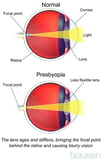 , occurs because the lens in the eye stiffens. Ordinarily, the lens changes its shape to assistance the middle focus. A stiffer lens makes focusing on close objects harder. Ultimately, nigh everyone gets presbyopia and needs magnifying reading glasses. People who need spectacles to see distant objects may need to wear bifocals or glasses with variable-focus lenses.
 -
Need for brighter light: Equally people continue to age, seeing in dim low-cal becomes more difficult because the lens tends to become less transparent. A denser lens means that less low-cal passes through to the retina at the back of the eye. Too, the retina, which contains the cells that sense lite, becomes less sensitive. So for reading, brighter light is needed. On average, threescore-year-olds need three times more light to read than twenty-year-olds.
-
Changes in color perception: Colors are perceived differently, partly because the lens tends to yellow with aging. Colors may look less bright and contrasts between different colors may exist more hard to see. Blues may expect more gray, and blue print or groundwork may await washed out. These changes are insignificant for about people. Nevertheless, older people may have trouble reading blackness letters printed on a blue background or reading blue messages.
The pupil of the eye reacts more slowly to changes in lite. The pupil widens and narrows to let more or less light in, depending on the brightness of the surroundings. A irksome-reacting pupil means that older people may be unable to run across when they start enter a night room. Or they may be temporarily blinded when they enter a brightly lit area. Older people may also go more sensitive to glare. Withal, increased sensitivity to glare is frequently due to darkened areas in the lens or to cataracts.
Fine details, including differences in shades and tones, become more than hard to discern. The reason is probably a decrease in the number of nerve cells that transmit visual signals from the eyes to the encephalon. This modify affects the manner depth is perceived, and judging distances becomes more than difficult.
The eyes tend to become dry. This modify occurs because the number of cells that produce fluids to lubricate the eyes decreases. Tear production may subtract.
The advent of the eyes changes in several ways:
-
The whites (sclera) of the eyes may turn slightly yellow or brown. This change results from many years of exposure to ultraviolet light, wind, and dust.
-
Random splotches of color may appear in the whites of the eyes, particularly in people with a dark complexion.
-
A gray-white ring (arcus senilis) may announced on the surface of the eye. The band is fabricated of calcium and cholesterol salts. It does not bear upon vision.
-
The lower eyelid may hang abroad from the eyeball because the muscles around the eye weaken and the tendons stretch. This condition (chosen ectropion) may interfere with lubricating the eyeball and contribute to dry out optics.
-
The heart may appear to sink into the head because the amount of fat around the heart decreases.
As people age, hearing high-pitched sounds becomes more than difficult. This change is considered historic period-associated hearing loss (presbycusis). For instance, violin music may sound less vivid.
The most frustrating consequence of presbycusis is that words become harder to understand. As a result, older people may think that other people are mumbling. Even when other people speak more loudly, older people still have difficulty understanding the words. The reason is that most consonants (such equally k, t, s, p, and ch) are loftier-pitched, and consonants are the sounds that assist people identify words. Because vowels are lower-pitched sounds, they are easier to hear. So older people may hear "Ell me exaly wha you wan oo ee," rather than "Tell me exactly what yous desire to keep." To assistance, other people need to articulate consonants more clearly, rather than merely speak louder. Understanding what women and children say may be more difficult than understanding what men say because nigh women and children have college-pitched voices. Gradually, hearing lower pitches also becomes more hard.
Many older people take more trouble hearing in loud places or in groups because of the background dissonance. Besides, earwax, which interferes with hearing, tends to accumulate more.
Thick hairs may grow out of the ears.
By and large, when people are in their 50s, the ability to gustatory modality and odour starts to gradually diminish. Both senses are needed to enjoy the full range of flavors in food. The natural language can identify only 5 basic tastes: sweet, sour, bitter, salt, and a relatively newly identified gustation called umami (ordinarily described every bit compact or savory). The sense of smell is needed to distinguish more than subtle and complex flavors (such as raspberry).
As people historic period, taste buds on the tongue decrease in sensitivity. This alter affects tasting sweet and table salt more than bitter and sour. The ability to smell diminishes because the lining of the nose becomes thinner and drier and the nerve endings in the olfactory organ deteriorate. Notwithstanding, the change is slight, usually affecting but subtle smells. Because of these changes, many foods tend to sense of taste biting, and foods with subtle smells may sense of taste bland.
The oral fissure tends to feel dry out more often, partly because less saliva is produced. Dry mouth further reduces the ability to gustation food.
As people age, the gums recede slightly. Consequently, the lower parts of the teeth are exposed to food particles and bacteria. As well, tooth enamel tends to wear away. These changes, besides as a dry out oral cavity, brand the teeth more susceptible to decay and cavities (caries) and thus make tooth loss more likely.
With aging, the olfactory organ tends to lengthen and enlarge, and the tip tends to droop.
Thick hairs may grow in the nose and on the upper lip and chin.
The skin tends to become thinner, less elastic, drier, and finely wrinkled. However, exposure to sunlight over the years profoundly contributes to wrinkling and to making the skin rough and blotchy. People who have avoided exposure to sunlight often await much younger than their age.
The pare changes partly considering collagen (a tough, fibrous tissue that makes pare potent) and elastin (which makes peel flexible) become chemically changed and less flexible; also,the crumbling body produces less collagen and elastin. Every bit a result, the pare tears more easily.
The fat layer under the skin thins. This layer acts every bit a absorber for the skin, helping protect and support information technology. The fat layer also helps conserve body heat. When the layer thins, wrinkles are more probable to develop, and tolerance for cold decreases.
The number of nerve endings in the peel decreases. As a result, people go less sensitive to pain, temperature, and pressure, and injuries may be more likely.
The number of sweat glands and blood vessels decreases, and blood period in the deep layers of the skin decreases. As a result, the body is less able to move heat from inside the body through blood vessels to the surface of the torso. Less estrus leaves the trunk, and the trunk cannot cool itself as well. Thus, the take chances of heat-related disorders, such as heatstroke, is increased. Also, when blood flow is decreased, the skin tends to heal more slowly.
The number of paint-producing cells (melanocytes) decreases. As a result, the pare has less protection against ultraviolet (UV) radiation, such equally that from sunlight. Big, brown spots (age spots) develop on skin that has been exposed to sunlight, maybe because the skin is less able to remove waste products.
The number of nervus cells in the brain typically decreases. However, the brain can partly recoup for this loss in several ways:
-
Every bit cells are lost, new connections are made between the remaining nerve cells.
-
New nerve cells may form in some areas of the encephalon, even during old historic period.
-
The brain has more cells than it needs to do most activities—a characteristic chosen redundancy.
Levels of the chemic substances involved in sending messages in the brain tend to decrease, but some increase. Nervus cells may lose some of their receptors for these chemical messages. Blood catamenia to the brain decreases. Because of these age-related changes, the brain may function slightly less well. Older people may react and exercise tasks somewhat more slowly, but given time, they do these things accurately. Some mental functions—such as vocabulary, brusque-term retention, the ability to learn new material, and the ability to call up words—may be subtly reduced later age seventy.
Later on about age sixty, the number of cells in the spinal cord begins to decrease. Usually, this alter does not affect strength or sensation.
As people age, nerves may comport signals more than slowly. Usually, this change is so minimal that people do not notice it. Also, fretfulness may repair themselves more slowly and incompletely. Therefore, in older people with damaged nerves, sensation and strength may be decreased.
The heart and blood vessels become stiffer. The heart fills with blood more slowly. The stiffer arteries are less able to expand when more blood is pumped through them. Thus, claret pressure level tends to increase.
Despite these changes, a normal older heart functions well. Differences between immature and former hearts become apparent merely when the middle has to piece of work difficult and pump more blood—for case, during practice or an illness. An older heart cannot speed upwardly as speedily or pump as fast or every bit much blood equally a younger heart. Thus, older athletes are non able to perform as well as younger athletes. Still, regular aerobic practise can improve able-bodied performance in older people.
The muscles used in breathing, the diaphragm and muscles between the ribs, tend to weaken. The number of air sacs (alveoli) and capillaries in the lungs decreases. Thus, slightly less oxygen is absorbed from air that is breathed in. The lungs become less elastic. In people who do not smoke or take a lung disorder, these changes exercise not affect ordinary daily activities, but these changes may brand exercising more difficult. Breathing at high altitudes (where there is less oxygen) may also exist harder.
The lungs get less able to fight infection, partly because the cells that sweep debris containing microorganisms out of the airways are less able to do so. Cough, which also helps clear the lungs, tends to exist weaker.
Overall, the digestive organization is less afflicted by aging than nearly other parts of the body. The muscles of the esophagus contract less forcefully, just movement of nutrient through the esophagus is not affected. Food is emptied from the stomach slightly more than slowly, and the stomach cannot hold as much food because it is less elastic. Merely in most people, these changes are too slight to be noticed.
The liver tends to become smaller considering the number of cells decreases. Less blood flows through information technology, and liver enzymes that aid the body process drugs and other substances work less efficiently. As a issue, the liver may be slightly less able to help remove drugs and other substances from the body. And the effects of drugs—intended and unintended—terminal longer.
The kidneys tend to become smaller because the number of cells decreases. Less blood flows through the kidneys, and at near age 30, they begin to filter blood less well. Equally years pass, they may remove waste products from the claret less well. They may excrete too much h2o and also little salt, making dehydration more likely. Notwithstanding, they nearly always function well plenty to meet the body's needs.
Certain changes in the urinary tract may make decision-making urination more difficult:
-
The maximum volume of urine that the bladder tin hold decreases. Thus, older people may demand to urinate more often.
-
The bladder muscles may contract unpredictably (go overactive), regardless of whether people need to urinate.
-
The bladder muscles weaken. As a result, they cannot empty the bladder as well, and more urine is left in the bladder after urination.
-
The musculus that controls the passage of urine out of the body (urinary sphincter) is less able to close tightly and prevent leakage. Thus, older people accept more difficulty postponing urination.
In women, the urethra (the tube through which urine leaves the trunk) shortens, and its lining becomes thinner. The decrease in the estrogen level that occurs with menopause may contribute to this and other changes in the urinary tract.
The effects of aging on sex hormone levels are more obvious in women than in men. In women, nigh of these effects are related to menopause Menopause Menopause is the permanent end of menstrual periods and thus of fertility. For up to several years before and just subsequently menopause, estrogen levels fluctuate widely, periods go irregular... read more 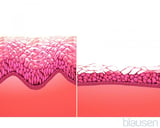 , when the levels of female person hormones (particularly estrogen) decrease dramatically, menstrual periods end permanently, and pregnancy is no longer possible. The decrease in female hormone levels causes the ovaries and uterus to shrink. The tissues of the vagina become thinner, drier, and less rubberband (a status called atrophic vaginitis). In severe cases, these changes can lead to itching, bleeding, pain during intercourse, and a need to urinate immediately (urinary urgency Urinary Urgency A compelling need to urinate (urgency), which may feel similar almost abiding painful straining (tenesmus), tin exist caused by float irritation. Uncontrolled loss of urine (incontinence) may occur... read more ).
The breasts become less firm and more gristly, and they tend to sag. These changes brand finding lumps in the breasts more difficult.
Some of the changes that begin at menopause (such as lower hormone levels and vaginal dryness) may interfere with sexual activity. Nonetheless, for about women, crumbling does not greatly backbite from enjoyment of sexual activity. Non having to worry about condign pregnant may enhance sex and enjoyment.
The levels and action of some hormones, produced by endocrine glands, decrease.
-
Growth hormone levels subtract, leading to decreased musculus mass.
-
Aldosterone levels decrease, making dehydration more probable. This hormone signals the body to retain salt and therefore water.
-
Insulin, which helps command the carbohydrate level in blood, is less effective, and less insulin may be produced. Insulin enables sugar to move from the claret into cells, where information technology tin can be converted to energy. The changes in insulin mean that the sugar level increases more than after a big meal and takes longer to return to normal.
-
Cancer is more than common amidst older people.
-
Vaccines tend to be less protective in older people, just influenza, pneumonia and shingles vaccines are essential and offer some protection.
-
Some infections, such equally pneumonia and flu, are more common amidst older people and consequence in death more often.
-
Allergy symptoms may become less astringent.
Every bit the allowed system slows downwardly, autoimmune disorders become less common.

| Generic Proper name | Select Brand Names |
|---|---|
| testosterone | DELATESTRYL |
Source: https://www.merckmanuals.com/home/older-people%E2%80%99s-health-issues/the-aging-body/changes-in-the-body-with-aging
0 Response to "what changes do you expect to see when the cells are exposed to the solutions from procedure 2"
Post a Comment